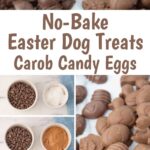
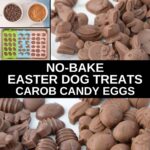
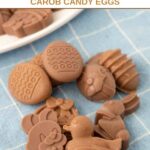
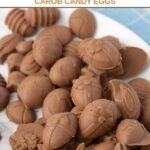

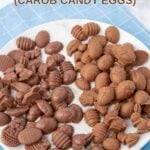
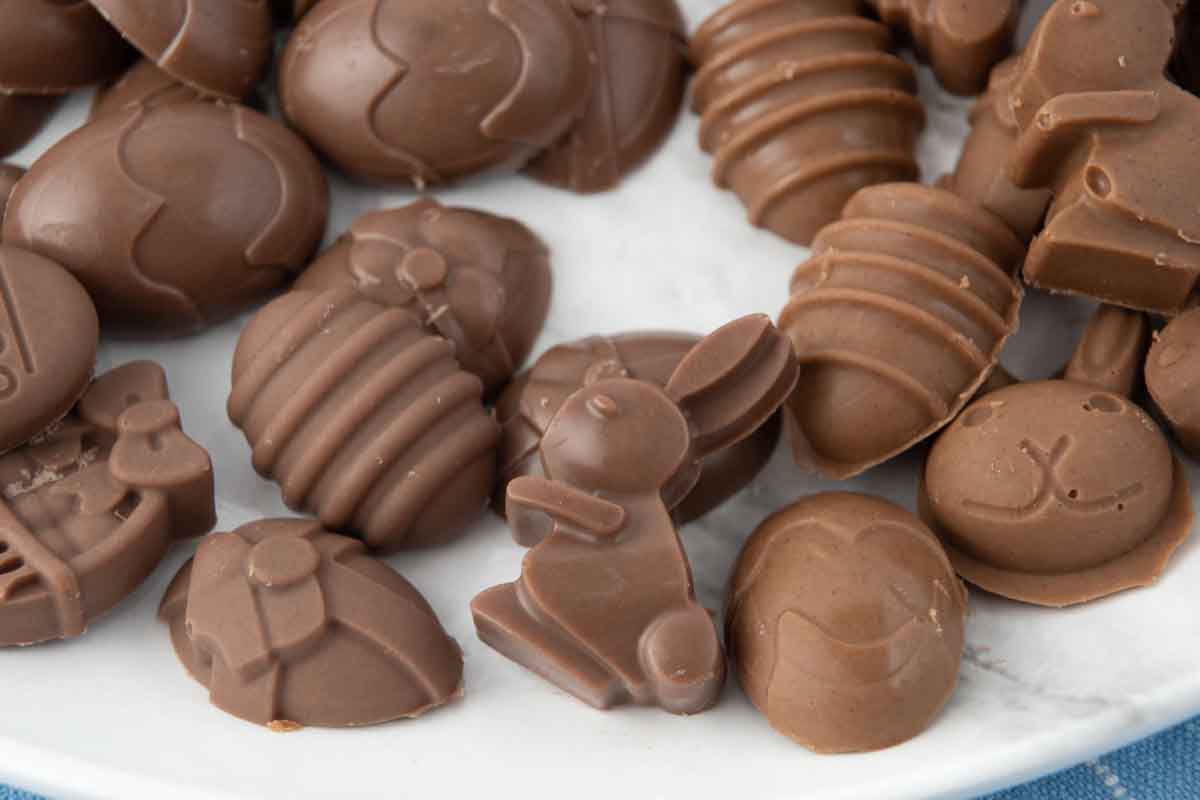
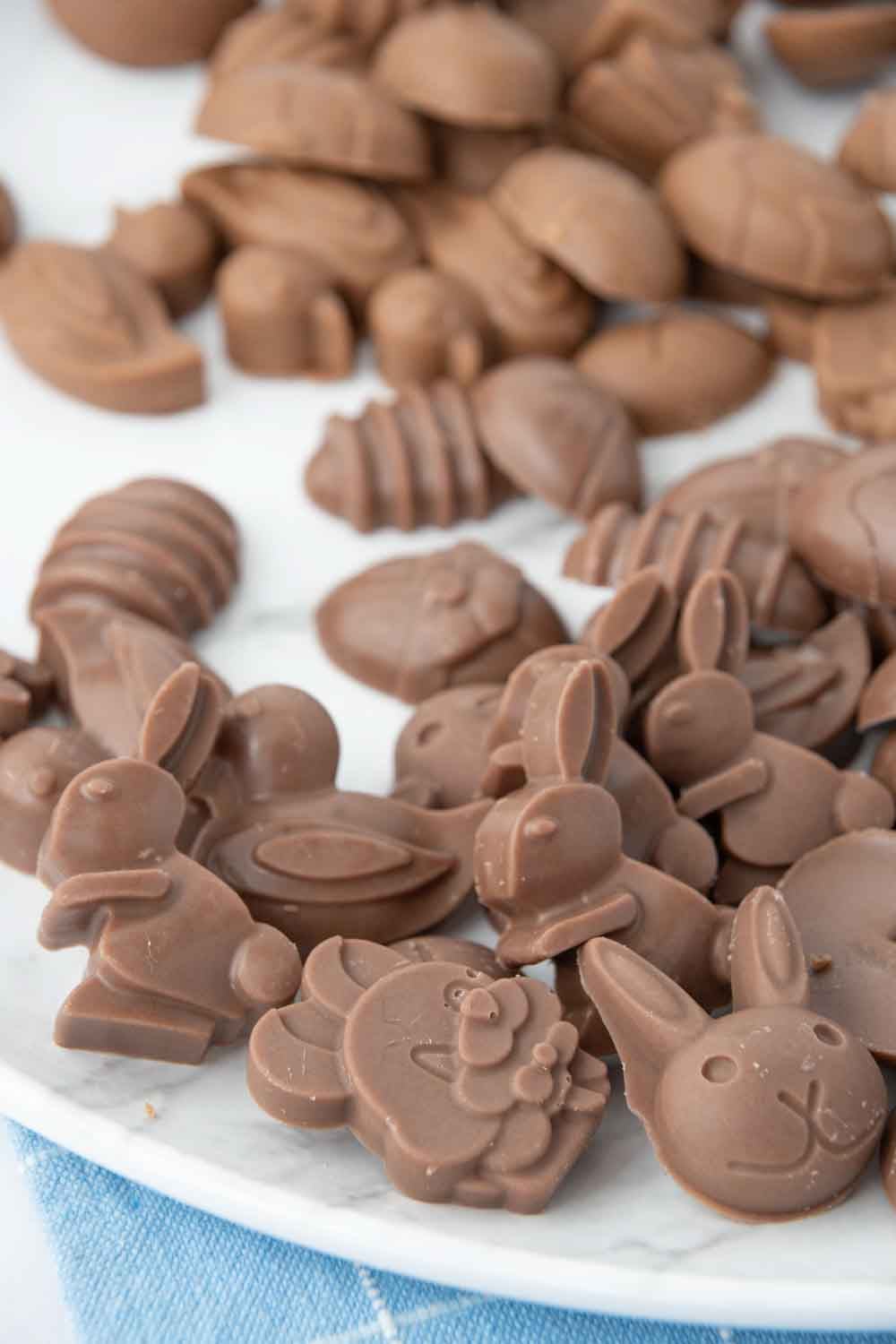
If you want to make Easter extra fun for your pup, these no-Bake Easter dog treats are the sweetest surprise. Shaped like eggs, bunnies, ducks, and baskets, these adorable little candies look just like holiday sweets, but they’re completely dog-safe. They’re smooth, slightly rich, and melt-in-your-mouth delicious without a single bit of chocolate.
They’re simple to make, fun to customize, and almost too cute to give away. Almost.

FYI – This post contains affiliate links. As an Amazon Associate, I earn from qualifying purchases.
Why You’ll Love This Recipe
There’s something so fun about making a festive Easter candy treat just for your dog. Watching them sniff the air while you pour the molds and then seeing their excitement when they get their very own holiday candy is pure joy. There are so many reasons this recipe will be a favorite.
Flavor Options – You can keep it simple with classic carob and coconut oil or go with the richer carob peanut butter version. Both are delicious and dog-approved.
Easy to Make – All you do is melt the ingredients, pour them into molds, and refrigerate until firm. No baking required. It’s one of the easiest Easter treats for dogs you’ll ever make.
Wholesome Ingredients – No chocolate, no added sugar, no artificial ingredients. Just simple, dog-friendly components you can feel good about.
Perfect for Celebrating Easter – These Easter eggs for dogs make adorable additions to Easter baskets. They also work beautifully as dog Easter treats for egg hunts or holiday photos.
Simple to Customize for Other Holidays – Swap out the Easter molds for Christmas trees, pumpkins, or hearts, and you instantly have festive treats for other holidays too.
Ingredients and What They Bring to the Candy
Each ingredient plays an important role in creating smooth, glossy candy that hardens beautifully in molds. Here’s what you’ll need:
For the carob treats:
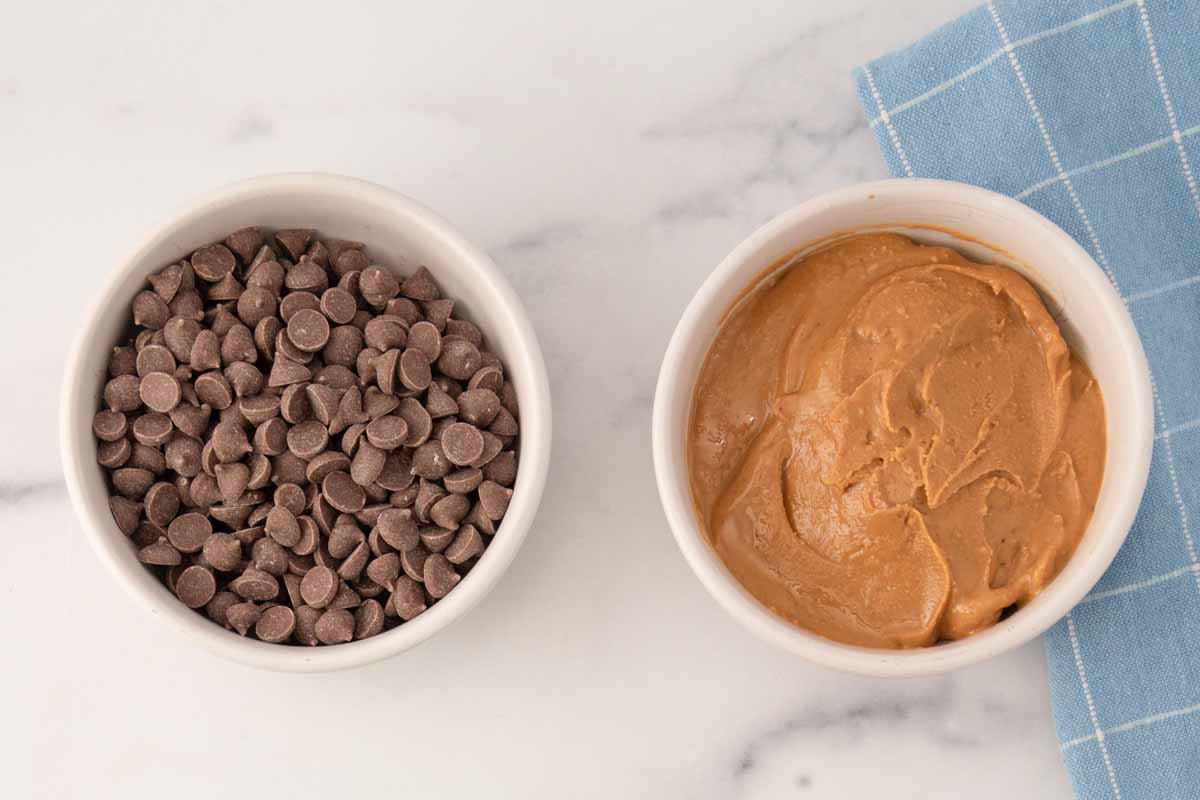
- Unsweetened carob chips – a dog-safe alternative to chocolate
- Coconut Oil – has healthy fats and helps harden the treats

For the carob peanut butter treats:
- Unsweetened carob chips – an alternative to chocolate that is safe for dogs.
- Natural creamy peanut butter – has protein, healthy fats, and is a flavor dogs love.
Ingredient Notes and Substitutions
Here are a few important tips and simple swaps to keep in mind.
- Do not use peanut butter that contains xylitol, an artificial sweetener that is toxic to dogs.
- You can substitute peanut butter with almond butter or sunflower seed butter, as long as it is xylitol-free.
- If you can’t find unsweetened carob chips locally, you can get sugar-free carob chips on Amazon.
Equipment Needed
You probably already have what you need for melting the candy. The key piece is Easter silicone candy molds to create fun shapes like eggs, bunnies, ducks, and baskets.

How to Make Easter Dog Treats
These easter egg dog treats come together quickly with either flavor option. Choose your method and follow the steps below.
Double Boiler Method
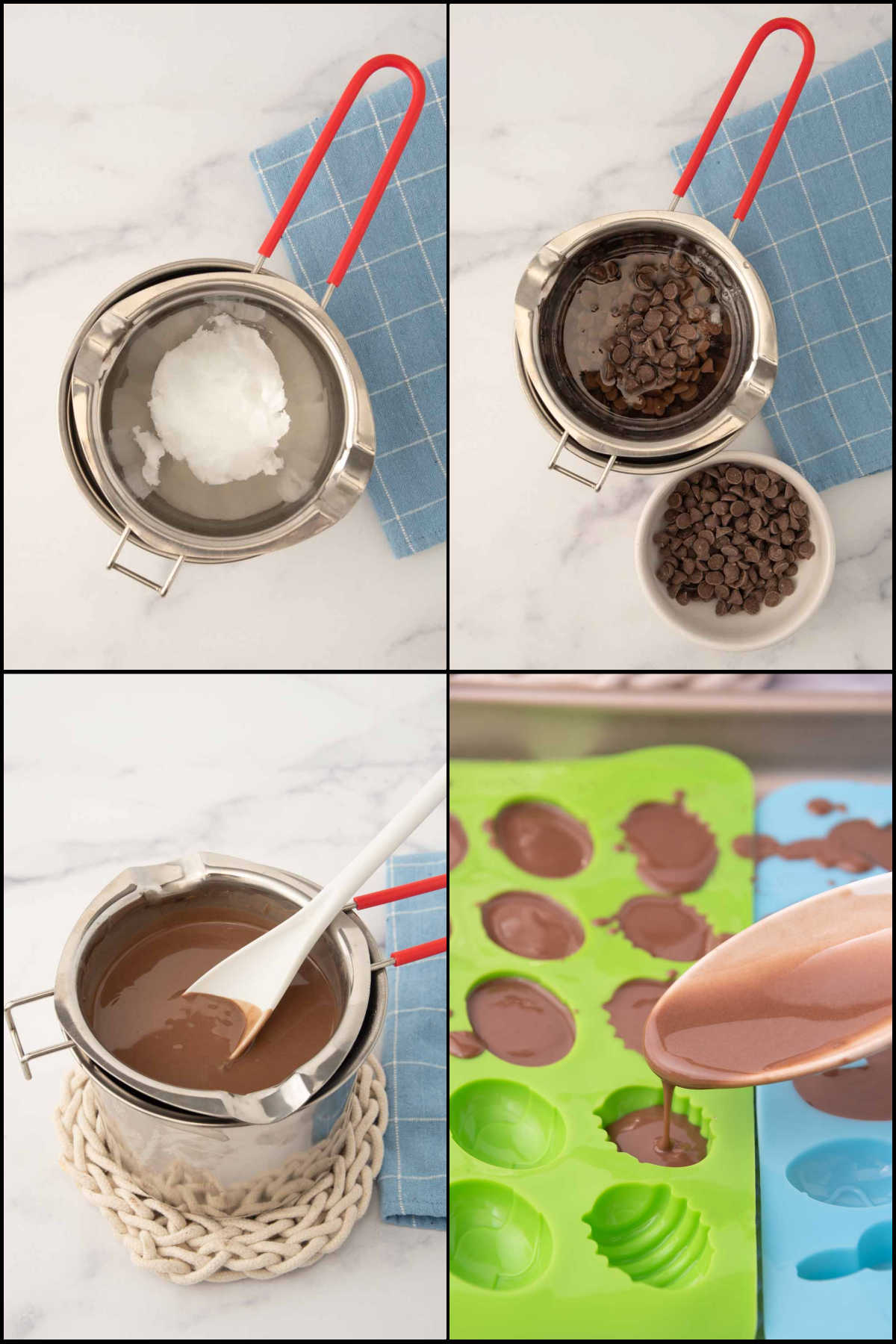
For the carob treats:
- Melt the coconut oil in a double boiler over simmering water.
- Add half of the carob chips and stir until they are melted.
- Add the remaining chips and stir until they are melted and the mixture is smooth.
- Spoon the mixture into silicone molds on a baking sheet.
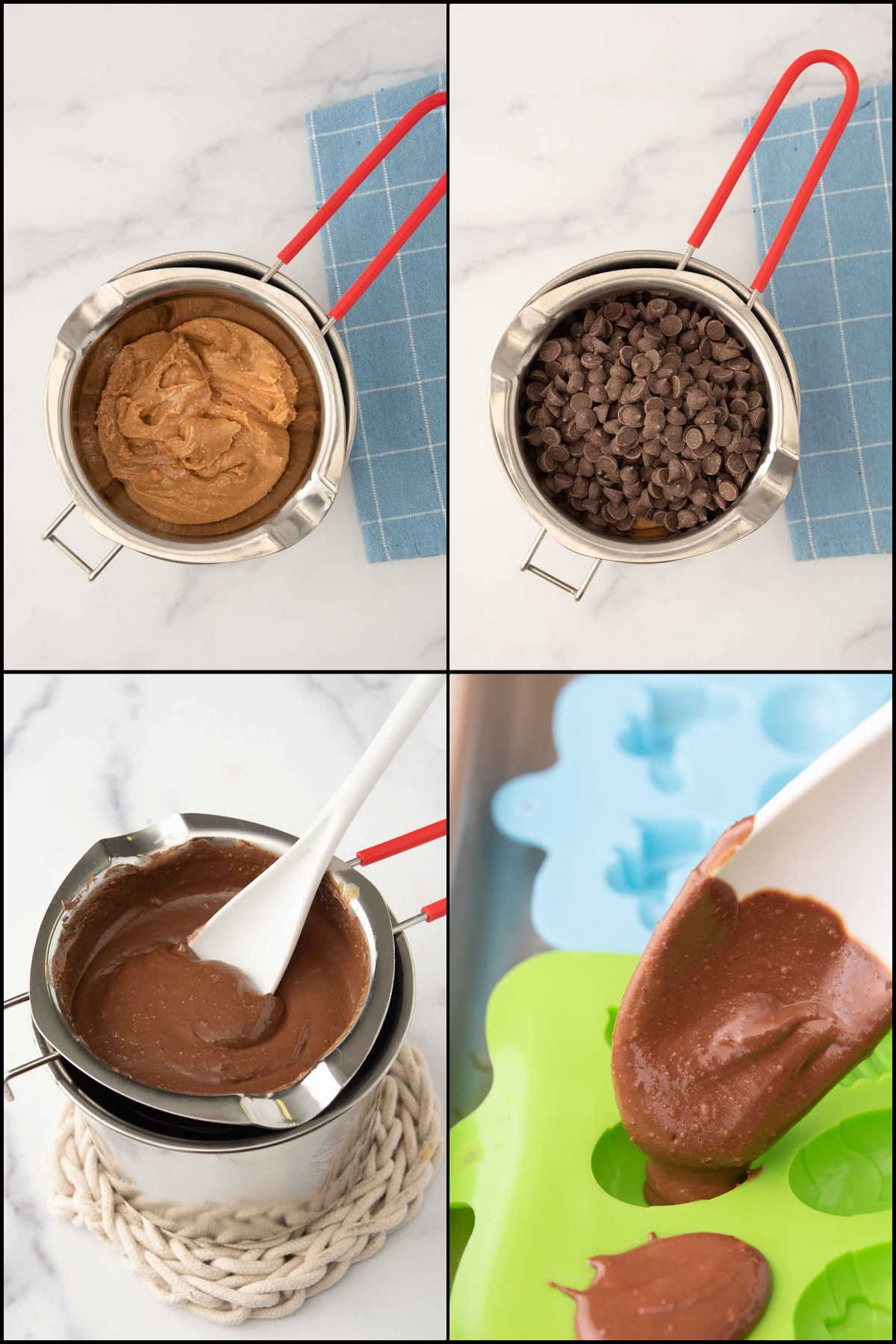
For the peanut butter carob treats:
- Melt the peanut butter in a double boiler over simmering water.
- Add half of the carob chips and stir until they are melted.
- Add the remaining chips and stir until they are melted and the mixture is smooth.
- If the mixture is too thick to pour with a spoon, add 1 tablespoon of coconut oil and stir until it is melted.
- Spoon the mixture into silicone molds on a baking sheet.
To finish the treats:
- Refrigerate the treats for at least 30 minutes until they are solid.
- Remove the treats from the molds.

Microwave Method
For the carob treats:
- Place ½ cup of coconut oil in a microwave-safe bowl.
- Microwave in 10-second increments until melted.
- Add ½ cup of carob chips into the melted coconut oil and microwave in 30-second increments until melted, stirring after each increment.
- Add ½ cup of carob chips and repeat microwaving and stirring them until the mixture is smooth.
- Spoon the mixture into silicone molds on a baking sheet.
- Refrigerate the treats until solid, about 30 minutes to 1 hour.
- Remove the treats from the molds.
For the peanut butter carob treats:
- Place 1 cup of peanut butter in a microwave-safe bowl.
- Microwave in 20-second increments until melted, stirring after each increment.
- Add ½ cup of carob chips into the melted peanut butter and microwave in 30-second increments until melted, stirring after each increment.
- Add ½ cup of carob chips and repeat microwaving and stirring them until the mixture is smooth.
- Spoon the mixture into silicone molds on a baking sheet.
- Refrigerate the treats until solid, about 30 minutes to 1 hour.
- Remove the treats from the molds.
How to Store the Candy and How Long It Lasts
Store the candy in an airtight container in the refrigerator for up to 1 month.
For longer storage, freeze in a freezer-safe container for up to 3 months. You can thaw them or give them to your dog as a frozen treat.
Can people eat this candy?
Yes, they sure can! All the ingredients are safe for human consumption. They would be a great Easter candy to make for anyone who is allergic to chocolate or watching their sugar intake. Give one a try and see if you like it.
More Treats to Make for Your Dog
Do you want to spoil your hound with more homemade treats? Try these recipes:
- Carob Cake
- Carob Dog Treats
- Carob Peanut Butter Cups
- Frozen Peanut Butter Dog Treats
- Gummy Bears
- Red Velvet Truffles
Find lots of easy recipes for no-bake dog treats and the best holiday dog treats right here on Spoiled Hounds!
No-Bake Easter Dog Treats
Ingredients
Carob
- ½ cup Coconut Oil
- 1 cup Unsweetened Carob Chips
Peanut Butter Carob
- 1 cup Natural Creamy Peanut Butter
- 1 cup Unsweetened Carob Chips
Instructions
Carob
- Double Boiler method: Using a double boiler, melt the coconut oil. Put half of the carob chips into the melted coconut oil and heat until melted. Add the other half of the chips and melt until smooth.
- Microwave method: Place the coconut oil in a microwave-safe bowl, melt the coconut oil in the microwave, about 10 to 15 seconds. Put half of the carob chips into the melted coconut oil and heat in 30-second increments until melted, stirring after each increment. Add the remaining carob chips and repeat microwaving and stirring them until the mixture is smooth.
- Place the silicone molds onto a baking tray to keep them steady.
- Using a spoon, pour the melted carob mixture into the silicone molds.
- Place the tray in the refrigerator for 30 minutes or until the carob is hardened.
- Turn the silicone molds over and pop out each treat. Place the treats in an airtight container and store them in the refrigerator.
Peanut Butter Carob
- Double Boiler method: Using a double boiler, heat the peanut butter until it is melted. Add the carob chips a little at a time and mix well. Stir and heat through until all the carob chips are melted and combined into the peanut butter.
- Microwave method: Place the peanut butter in a microwave-safe bowl, melt the peanut butter in the microwave, about 15 to 20 seconds. Add half of the carob chips and microwave in 30-second increments until melted, stirring after each increment. Add the remaining carob chips and repeat microwaving and stirring them until the mixture is smooth.
- Place the silicone molds onto a baking tray to keep them steady.
- Using a spoon, pour the melted carob peanut butter mixture into the silicone molds.
- Place the tray in the refrigerator for 30 minutes or until the carob mixture is hardened.
- Turn the silicone molds over and pop out each treat. Place the treats in an airtight container and store them in the refrigerator.
Notes
Nutrition
Serving Amount
Treats should make up no more than 10% of your dog’s daily calories. Consult your vet if you are unsure of the portion size for your dog.
If your dog hasn’t had any of these ingredients before, start with a small piece to make sure they don’t have any allergies, sensitivities, or adverse reactions.

Leave a Reply