


If you’ve ever had a dog sit inches from your plate while you’re eating sushi, this recipe is for you. Homemade sushi for sogs lets your pup enjoy their own safe and tasty version while you enjoy yours. These little rolls look adorable, smell amazing, and are made with dog-friendly ingredients that are easy to work with. It’s a fun way to turn treat time into something special.

Why You Will Love This Recipe
Sharing food moments feels extra special, and this recipe delivers on both fun and flavor. There are many reasons why this recipe will become a favorite.
Easy to Make – Rolling the sushi is simple and doesn’t require any special skills. You can shape everything by hand or use parchment paper or a sushi mat to help.
Wholesome Ingredients – This recipe uses simple, dog-safe ingredients. There’s no raw fish, salty soy sauce, spicy wasabi, or avocado involved.
Saves Money – Making dog sushi at home costs much less than buying special dog-friendly sushi from a restaurant or boutique pet store.
Irresistible Fishy Flavor – Dogs go crazy when they catch a whiff of fish.
Sharing Sushi Time – Now your dog can enjoy sushi too, which means no more sad puppy eyes while you’re eating yours. These dog sushi treats make it easy to include your pup in the fun.

Ingredients and What They Bring to the Sushi
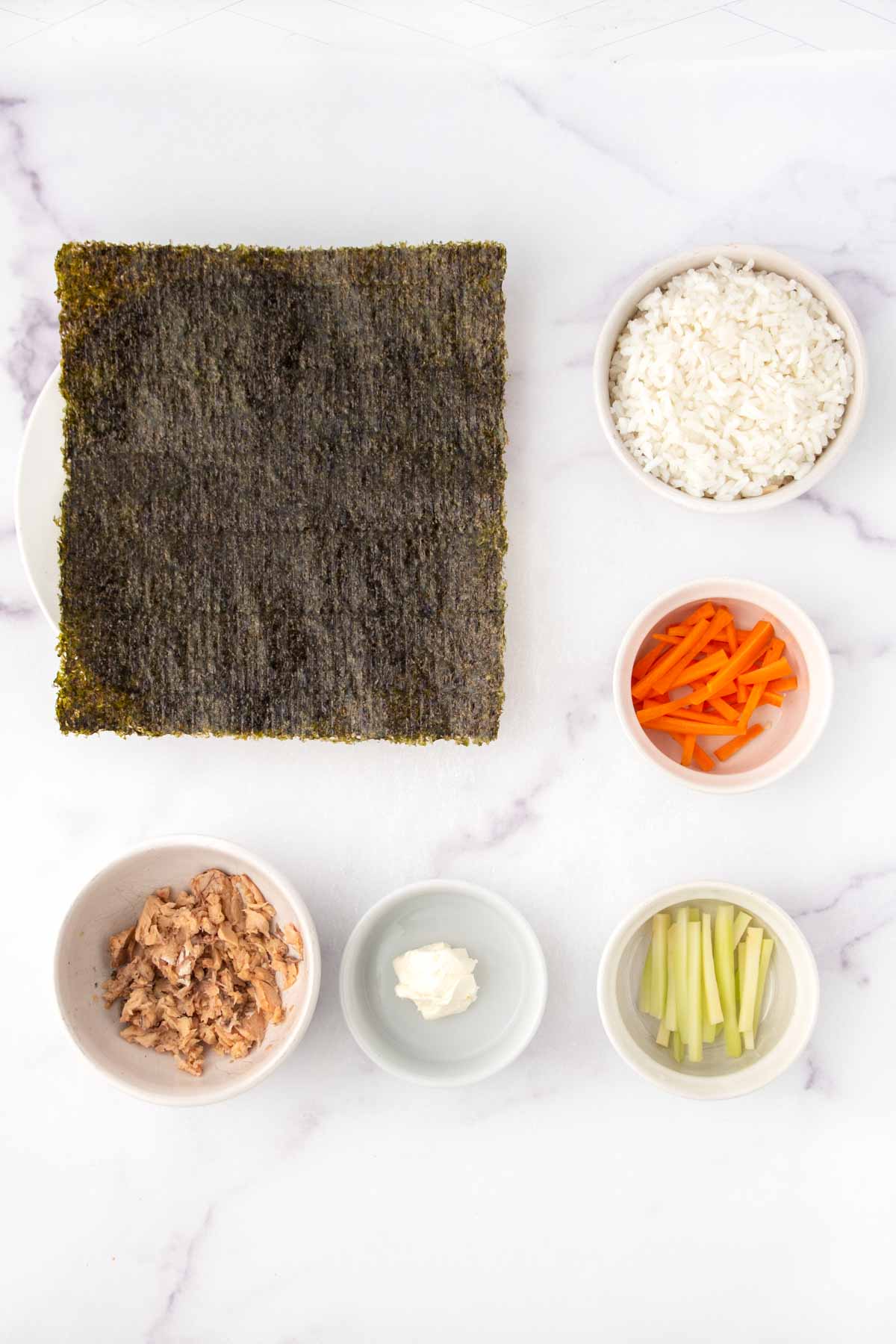
Each ingredient plays an important role in making sushi that holds together well and tastes great.
- Cooked white rice gives the sushi structure and helps everything stick together.
- Carrot adds crunch and a little natural sweetness.
- Cucumber brings freshness and texture without overpowering the other flavors.
- Canned salmon provides protein, and that irresistible fishy aroma dogs love.
- Low-fat cream cheese helps bind the filling and adds creaminess.
- Nori sheet wraps everything together and gives the sushi its classic look.
Ingredient Notes and Substitutions
This recipe is flexible, so it’s easy to make adjustments based on what you have on hand.
- Canned fish can be swapped with canned tuna, mackerel in olive oil that is not brined in salt, or sardines packed in water.
- Cooked fish can be used instead of canned fish. Salmon, cod, flounder, or other white fish all work well.
- Raw fish should not be used because it may contain harmful parasites or bacteria such as salmonella and listeria.
- Cream cheese can be substituted with low-fat plain Greek yogurt or cottage cheese.
- Veggies can be swapped with green beans or parsnips if your dog prefers those.
Equipment Needed
You likely already have everything you need to make this recipe. The sushi can be rolled by hand, but using parchment paper or a sushi rolling mat makes it easier. A bamboo sushi mat or a silicone sushi mat both work well.
How to Make Sushi for Dogs
Making dog-friendly sushi is easier than it looks, and the steps come together quickly.
- Cook the rice according to the package directions without salt or seasoning and allow it to cool completely.
- Peel and julienne the carrot and cucumber into thin strips.
- Flake the canned salmon in a small bowl and mix it with the softened cream cheese until combined.
- Place the nori sheet shiny side down on a flat surface, parchment paper, or a sushi mat.
- Spread the cooled rice evenly over the nori, leaving a small border at the edges.
- Arrange the salmon mixture in a line near one long edge, then place the carrot and cucumber on top.
- Roll tightly, starting from the filled edge, pressing gently as you roll to keep it compact.
- Moisten the edge of the nori with water and press to seal.
- Use a wet, sharp knife to slice the roll into 8 equal pieces.

How to Make Dog-Safe Sushi Rice
Traditional sushi rice for people includes sugar and salt, which are not good for dogs. You can use regular cooked rice for this recipe, but making a dog-safe sushi-style rice gives better stickiness.
Rinse sushi rice several times until the water runs clear. Soak it for 30 minutes, then drain. Cook with water according to instructions until the water is absorbed. Let it rest covered, then gently mix in rice vinegar and spread it out to cool completely before using.
How to Store the Sushi and How Long It Lasts
Store the sushi in an airtight container in the refrigerator for up to 4 days. Freezing is not recommended because the texture of the rice and vegetables changes once thawed.
Can people eat this sushi?
Yes, they sure can. All of the ingredients are safe for human consumption. Give it a try, and you may like it.

More Dog Treat Recipes
How about making some more dog treats with fishy flavor? Oh yes! Try these recipes:
- Liver Cake
- Mackerel Dog Treats
- Salmon and Sweet Potato Dog Treats
- Sardine Dog Treats
- Tuna Dog Treats
Find lots of easy dog treat recipes with fish and meat right here on Spoiled Hounds!

Sushi for Dogs
Ingredients
- 1 cup cooked white rice
- 1 small carrot
- 1/2 cucumber
- 1 ounce canned salmon
- 1 tablespoon softened low-fat cream cheese
- 1 nori sheet
Instructions
- Cook rice in water according to the package instructions (without salt or seasoning). Allow it to cool to room temperature.
- Peel and julienne the carrot and cucumber.
- Flake the salmon with a fork in a small bowl. Add the cream cheese to the salmon and stir well.
- Lay the nori sheet, shiny side down, on a flat surface, bamboo mat covered in plastic wrap, or parchment paper. Spoon the rice onto the sheet and spread it evenly over the sheet almost to the edges.
- Make a line of the salmon mixture near a long edge, from one side to the other. Place the carrots and cucumber on top of the salmon. Tightly roll up starting from the salmon edge, with your hands or using the mat or parchment. Press while rolling to compact the rice.
- Moisten the edge of the nori with a water-dampened finger and press to seal it. Use a wet serrated or very sharp knife to slice into equal pieces.
- Store in the refrigerator.
Notes
- 1 cup sushi rice (Japanese short-grain rice)
- 1½ cups water, plus more for rinsing and soaking
- 1 tablespoon rice vinegar
Nutrition
Serving Amount
Treats should make up no more than 10 percent of your dog’s daily calories. If you’re unsure about portion size, consult your veterinarian.
If your dog hasn’t had any of these ingredients before, start with a small piece to make sure there are no allergies or sensitivities.

Leave a Reply